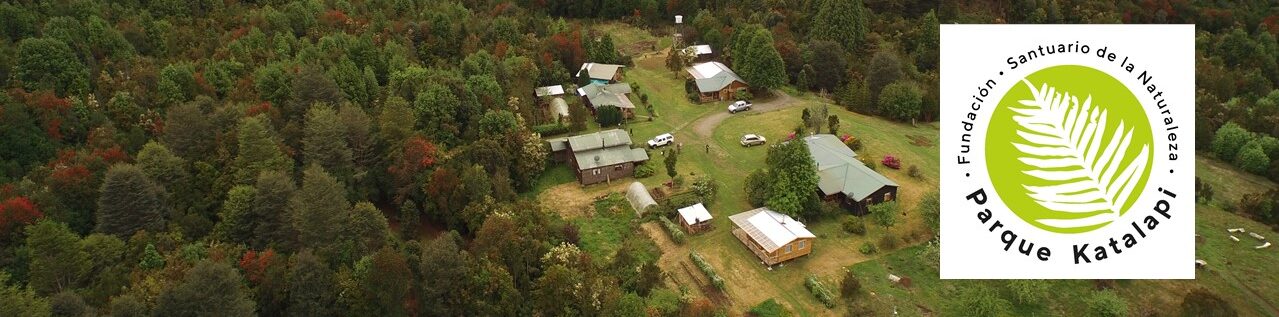
Editorial in the new journal of plant ecophysiology highlights the importance of Chilean ecophysiologists and Parque Katalapi in this discipline
The journal Plant Ecophysiology (https://www.sciltp.com/journals/PlantEcophys) has just been launched. Its first editorial, written by Professor Dr. Jaume Flexas, is entitled “On the Forgotten Importance of Plant Ecophysiology: It’s Time to Say We Are Here!” In it, Dr. Flexas traces the history of plant ecophysiology, highlighting its major milestones as well as its main challenges.
During the 1970s and 1980s, the discipline experienced a remarkable boom, led primarily by European, North American, and Australian scientists. In recent years, this momentum has intensified, and it is precisely here that the author emphasizes the important role Chilean scientists and Parque Katalapi have played in the current rise of the discipline:
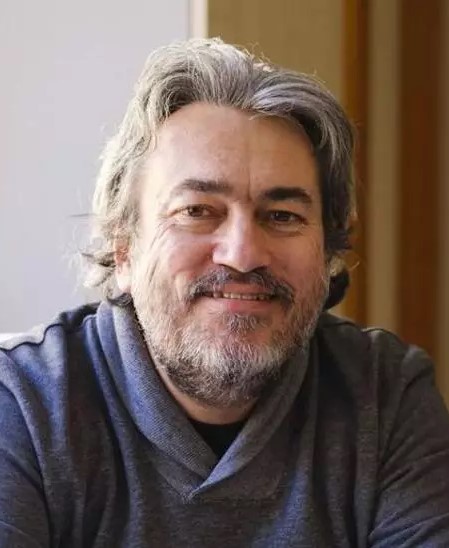
Jaume Flexas, editor of the new journal
“But even today, I am sure that most of us, if not all, are quite convinced that Plant Ecophysiology is indeed a well-defined scientific discipline with deep roots and solid foundations. Yet let me return for a moment to ‘emotional ecophysiology.’ At least for me, as is evident from the paragraphs above, people in ecophysiology are also a family. This feeling is reinforced by my devotion to belonging to two well-defined communities of Plant Ecophysiology: the Katalapi community in Chile and the Coloquio community in Spain.
The Katalapi Colloquium, named after its host institution, Parque Katalapi (https://english.parquekatalapi.cl/, accessed May 20, 2025), has been held without interruption (except for the pandemic years) since 2008, thanks to the generosity of a distinguished ecophysiologist (formerly a plant biochemist!): Luis Corcuera, ‘el Doc’. I am glad to have attended this colloquium many times, meeting there with leading Chilean ecophysiologists — many of them now our most frequent scientific collaborators — such as Luis Corcuera, Luisa Bascuñán, León Bravo, Lohengrin Cavieres, Rafa Coopman, Nicolás Franck, Enrique Ostria-Gallardo, Claudio Pastenes, Frida Piper, Alejandra Zúñiga, and many others, including, of course, our Associate Editor of Plant Ecophysiology, Patricia ‘Patty’ Sáez! Apologies for not mentioning everyone — the amazing thing is that there are so many of us that I can easily forget a few.
The Katalapi Colloquium is international and has hosted prominent international ecophysiologists such as John Bishop, Tim Colmer, Ingo Ensminger, Norman Huner, Alex Ivanov, Christian Körner, Adrienne Nicotra, Ülo Niinemets, Rafael Oliveira, Mark Olson, Michael Shane, Robert Turgeon, Matthew Turnbull, and many others (it was there that I met another of my current Associate Editors, Paulo Marchiori — thank you for being both there and here!), along with many Spanish researchers including Pere Aguiló-Nicolau, Marc Carriquí, Xisco Castanyer, María J. Clemente, Antonio Díaz-Espejo, Xurxo Gago, Jeroni Galmés, Leopoldo García-Sancho, Conchi Íñiguez, Melanie Morales, Miquel Nadal, Alicia Perera-Castro, Miquel Ribas-Carbó … and the ‘almost every year’ participants, Nacho García-Plazaola, Bea Fernández-Marín, and myself.
In addition to us three, among the ‘international’ attendees, I must highlight three others who have returned many times, becoming ‘full-fledged Katalapians’: Marylin Ball, Hans Lambers, and Bruce Osborne. Just from the names, and the year-after-year loyalty of so many participants, you can imagine how special the Katalapi Colloquium is in creating a true community and advancing Plant Ecophysiology, from which many international collaborations have emerged. So special, in fact, that Nacho, Bea, and I decided years ago to copy the idea and create a similar event in Spain — a gathering of a small group of plant ecophysiologists who meet every year for several days, this time in rotating remote locations in Spain, sharing not only science but also excursions (mostly in the field, though I must say also in the nearest pubs).
This ‘Coloquio’ is mainly based in Spain and conducted in Spanish, but you can still find there — some more regularly, some more sporadically — well-respected ecophysiologists such as the Chileans Daniela Aros, Luis Corcuera, Rafa Coopman, and Enrique Ostria-Gallardo, and the Spaniards Ismael Aranda, Javier Cano, Marc Carriquí, Miquel A. Conesa, Antonio Díaz-Espejo, Raquel Esteban, Bea Fernández-Marín, Xurxo Gago, Jeroni Galmés, Nacho García-Plazaola, Eustaquio Gil-Pelegrín, Águeda González, Javi Gulías, Rosana López, Jordi Martinez-Vilalta, Enrique Mateos-Naranjo, Fermín Morales — the only one to have attended every single edition! — Sergi Munné-Bosch, ‘Jota’ Peguero-Pina, Nacho Querejeta, Fernando Valladares, Albert Vilagrosa, …
Beginning with the pioneering introduction of Plant Ecophysiology in Spain, labeled as such by just a few people — for example, Enar Alegre, José Luis Araus, Luis Ayerbe, Carles Gràcia, María Soledad Jiménez, José Alberto Pardos, Manuel Sánchez-Díaz, Robert Savé, Arturo Torrecillas, or Hipólito Medrano — the Coloquio has now created a true scientific community around Plant Ecophysiology. From it, many collaborations and visitor exchanges have arisen, and most importantly, it has instilled in all of us the sense of belonging to a family.”