The Birdwatchers Network (ROC) and Katalapi Park are promoting a new Bird Banding Station
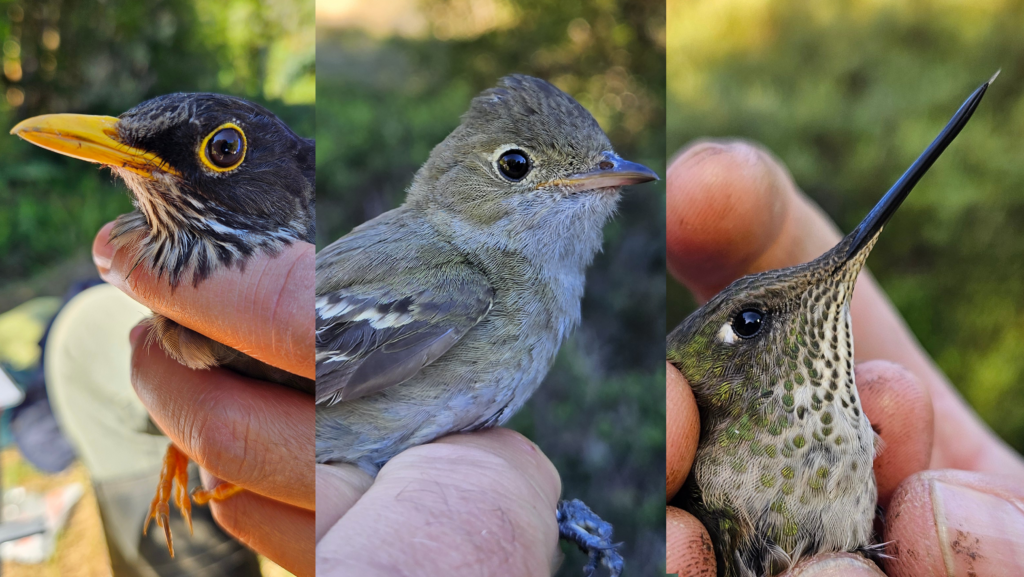
Austral Thrush (Turdus falcklandii), White-crested Elaenia (Elaenia albiceps), Green-backed Firecrown (Sephanoides sephaniodes). Photo: Danae Garrido
The Birdwatchers Network (ROC) has launched a program to expand knowledge about the biology, ecology, and migratory routes of the birds that inhabit the Parque Katalapi Nature Sanctuary. This initiative involves placing a small metal band with a unique code on each bird, which is then released without causing any harm. If the bird is recaptured in another location, the band allows it to be identified and its movements tracked, helping determine its migratory routes, wintering grounds, and breeding areas. Notably, this banding program, organized by ROC, is carried out thanks to the efforts of a dedicated group of volunteers. The knowledge generated will undoubtedly contribute to creating or improving conservation programs for the various bird species involved.
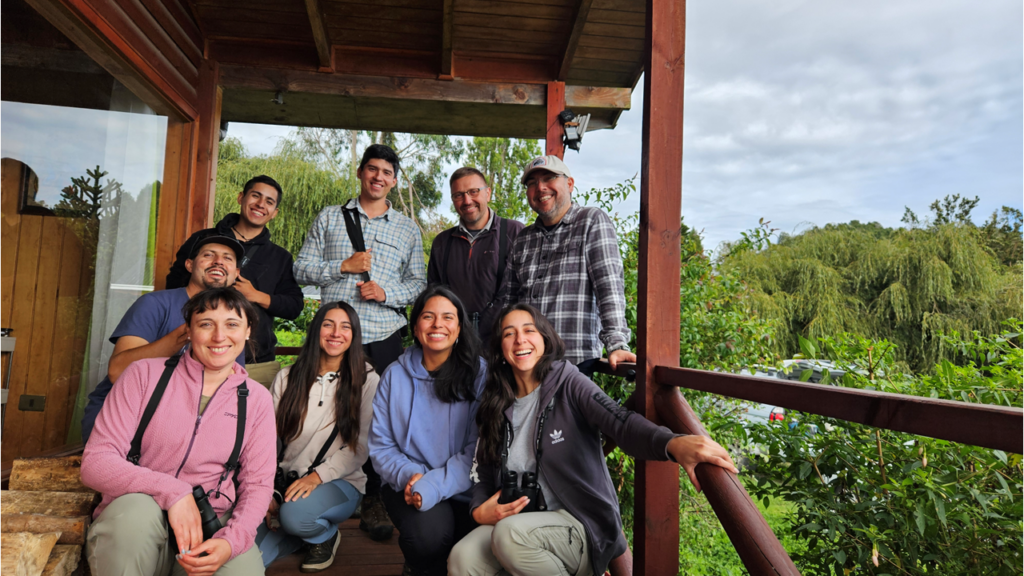
Part of the local ROC team and NABC banding instructors (left to right): Angélica Almonacid, Daniel Terán, Matías Gutiérrez, Bernardita Muñoz, Eduardo Quintanilla, Danae Garrido, Pablo Brandolin, Gabriela Contreras, Mauricio Ugarte. Photo: Danae Garrido
The Parque Katalapi Foundation is part of a long-term ecological research network (LTSER) and is committed to developing environmental education programs for schoolchildren, adults, and communities. Research on the park’s species is essential to generate these educational initiatives. For this reason, Katalapi has implemented monitoring programs for amphibians, bats, felines, and the monito del monte, now joined by the program initiated by ROC. Having data on the migratory routes of birds will allow us to integrate them into our educational activities, thus fostering respect and care for nature among children and communities. Our goal is to break the vicious cycle in which we do not protect what we do not love, and we do not love what we do not know.